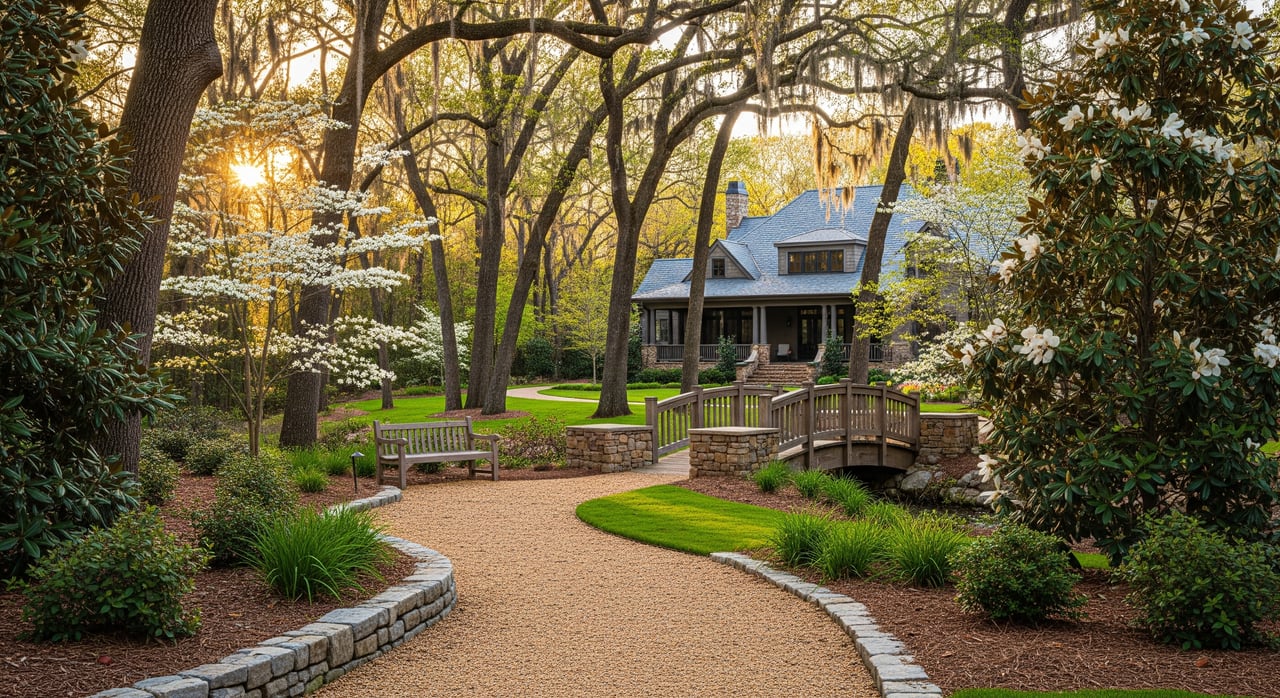
Do you picture evening dog walks on a shady path, or Saturday mornings at a lake with kayaks and fishing poles? If so, park and greenway access should be a key filter in your Holly Springs home search. You want a neighborhood that fits your lifestyle today and supports your routines for years to come. In this guide, you’ll learn how to evaluate access, match amenities to your priorities, and spot tradeoffs that matter to your budget and daily life. Let’s dive in.
Why parks and greenways matter
Outdoor access shapes how you live. In Holly Springs, greenways and parks connect daily activities like school drop-offs, quick dog walks, and weekend family outings. Close access can mean more time outside, less time in the car, and a neighborhood rhythm that supports health and connection. It can also influence buyer demand and long-term appeal when you go to sell.
The network at a glance
Holly Springs features a mix of park types and trail segments that serve different needs:
- Community parks for multi-sport fields, playgrounds, and group gatherings.
- Destination parks with water access for fishing, paddling, and boardwalk views.
- Neighborhood pocket parks that provide quick play areas or quiet green space.
- Linear greenways and multi-use trails for walking, running, and biking.
- Sports complexes with organized fields and courts.
- Dog-friendly areas and on-leash walking routes.
- Natural preserves and stormwater ponds that add scenery and informal open space.
A commonly cited example is Bass Lake Park, known locally for its lake setting with boardwalk, fishing and kayak access, and family-friendly amenities. You should verify current facilities, hours, and dog rules with Town resources so you have the most accurate picture.
How to check access from a home
Start with the routes you will use most. From a listing address, map the walk to the nearest trailhead or park entrance. Look at sidewalk coverage, street crossings, and whether the route feels comfortable at your pace. If you plan to bike, note where greenways are continuous versus where you may need to ride on streets.
- Sidewalks offer direct access on streets.
- Greenways provide car-free travel, though reaching the trail may add a few minutes.
- Many larger parks are a 5 to 15 minute drive from most neighborhoods.
- Parking can be limited on busy weekends, so walking or biking locally can be a real time-saver.
Quick distance cheat sheet
Use these conservative estimates to gauge your day-to-day routine:
- 5-minute walk is about 0.2 to 0.3 miles.
- 10-minute walk is about 0.4 to 0.6 miles.
- 15 to 20 minutes on foot is about 0.8 to 1 mile.
- A casual 10 to 15 minute bike ride often covers 2 to 3 miles.
What to look for at each park
When you tour a park or review a map, focus on the amenities that match your lifestyle and comfort needs:
- Core amenities: playgrounds, restrooms, parking, picnic shelters, grills, athletic fields or courts.
- Water access: fishing piers, boardwalks, kayak or canoe launches.
- Surfaces and access: paved vs natural trails, ADA access, shade and tree cover.
- Lighting and visibility: check evening conditions along routes you might use.
- Programming: classes, leagues, and reservation rules for shelters or fields.
- Dog policies: on-leash requirements and whether any fenced off-leash areas exist.
If an amenity is a must-have, confirm it with the Town’s official park pages or by calling Parks and Recreation. Rules and facilities can change with maintenance or seasonal schedules.
Park spotlights to put on your map
Here are common references buyers explore in Holly Springs. Treat these as starting points and verify current names and amenities with official Town resources.
- Bass Lake Park: A widely known lakefront destination with boardwalk views and fishing and kayak access, plus family-friendly features. Check hours, parking, and dog rules.
- Community-scale parks: Look for parks that combine playgrounds, fields, and picnic areas. These often anchor a 5 to 10 minute bike ride from nearby neighborhoods.
- Neighborhood greenways: Short connectors can turn a subdivision loop into a car-free route to school or a community park.
- Regional connections: Many buyers value greenway links that head toward Apex or Cary for longer bike runs. Verify which segments are complete versus planned before you count on them.
Pair amenities with your lifestyle
Match your top priorities with nearby options and housing types so your daily routine feels natural from day one.
Families with young children
- Priorities: playgrounds, picnic shelters, short walks, and predictable routes.
- Home match: single-family homes in established subdivisions with sidewalks and quick access to community parks.
- Tip: measure a real-world walk to the nearest playground during a typical after-school time.
Dog owners
- Priorities: frequent greenway access, shaded routes, and a convenient loop for morning and evening walks.
- Home match: single-family homes with fenced yards or townhomes with easy trail access.
- Tip: confirm municipal leash rules and the location of dog waste stations on your most-used routes.
Active adults, cyclists, and runners
- Priorities: continuous paved greenways, safe crossings, and supportive storage space at home.
- Home match: homes or townhomes near trailheads or planned greenway corridors.
- Tip: check for gaps in trail continuity that might require brief on-street connections.
Weekend nature and lake time
- Priorities: destination parks with water access, picnic areas, and longer trails.
- Home match: a wide range of price points work, since weekend use often involves a short drive.
- Tip: consider Saturday morning parking patterns if you prefer to drive to the lake.
Proximity, pricing, and tradeoffs
Homes close to popular parks or near a greenway entrance often draw extra attention. The premium varies by park and by market conditions, but there are tradeoffs to weigh.
- By a destination park: weekend traffic and parking overflow can increase.
- Along a greenway: daily-use benefits are high, but confirm lighting and visibility if you plan evening walks.
- Near ponds or creeks: check lot usability and floodplain status if a property backs to water or drainage corridors.
HOA and rules to confirm
Your due diligence should include the fine print that affects everyday use and resale value.
- HOA-maintained pocket parks and private trails may be residents-only and follow specific hours.
- Town parks are public, but certain activities may require permits, and rules govern events and commercial use.
- Dog policies are enforced by municipal code and park signage. Confirm before you rely on off-leash assumptions.
- Fence height and yard-use rules can affect dog owners and outdoor storage.
Map like a pro
A clear visual can save you hours of guesswork. If you want a custom view, ask for a buyer map that layers your top candidates with nearby amenities.
- Base map: Town boundary, subdivisions, major streets.
- Parks: labeled park areas with icons for playgrounds, restrooms, parking, and water access.
- Trails: paved vs unpaved greenways and pedestrian-only paths.
- Points of interest: trailheads, public parking lots, kayak launches, community centers, and any dog facilities.
- Time buffers: 5, 10, and 15-minute walking rings around each home; 10 and 20-minute biking buffers.
- Safety overlays: major crossings and lighting notes along key segments.
- Planning checks: floodplain and conservation layers to flag lots near ponds or creek corridors.
Use official Town maps and plans as your primary source, cross-check with county parcel and flood layers, and confirm trail surfaces and any closures before relying on a route.
Safety, maintenance, and seasonal notes
Outdoor networks evolve. Keep an eye on conditions and updates so your routines stay smooth and safe.
- Leash and pet laws: follow Town rules and posted signs. Policies vary by location.
- Flood risk: greenways often follow creek corridors. Confirm FEMA flood maps and local designations for any adjacent property.
- Maintenance and closures: storms can close trail segments. Check Town alerts before planning long routes.
- Peak use and parking: popular sites can be busy on weekends. A short walk or bike from home can be faster than circling lots.
- Supervision: if you have young children, consider how close the playground is for quick checks and meetups.
Sample neighborhood pairings
Use these vignettes to think through your daily routine and home features.
- Young family scenario: a 4-bedroom single-family home within a 10-minute walk of a community park. The route uses sidewalks the entire way, with one marked crossing. Afternoons mean swings, slides, and an easy picnic.
- Dog owner scenario: a townhome near a greenway connector where you can do a 20-minute loop before work. Fenced patio for downtime, plus quick access to shaded segments in summer.
- Active cyclist scenario: a home near a planned trailhead with garage storage for bikes and a quick roll-out to paved segments. You can reach regional connections within a 15-minute ride.
- Weekend lake-goer scenario: a single-family home a short drive from a destination park with water access. You keep kayaks in the garage and plan early morning visits to secure parking.
How I support your search
Choosing the right home in Holly Springs means pairing floor plan and finishes with the outdoor access that elevates your daily life. I combine neighborhood-level knowledge with a planning mindset so you understand real walking routes, greenway continuity, weekend traffic patterns, and any floodplain or HOA considerations. If you are weighing new construction, I also help you match lots and finishes to your lifestyle so you enjoy both the design and the location.
Ready to explore homes that fit your outdoor rhythm and your long-term goals? Let’s map your short list and walk the routes together. Reach out to Rod Hudson to get started.
FAQs
How close should I live to a park in Holly Springs?
- Aim for a 5 to 15 minute walk for daily use. Use 0.2 to 0.3 miles for 5 minutes and about 0.8 to 1 mile for 15 to 20 minutes as quick guides.
What are typical dog rules in Holly Springs parks and on greenways?
- Expect on-leash requirements unless a site is clearly designated otherwise. Always follow posted signs and municipal code.
Does living near a greenway affect home value?
- Proximity can add appeal for many buyers, but the premium varies by park and market. Weigh benefits against tradeoffs like lighting or weekend foot traffic.
How do I check if a trail is paved and continuous?
- Use the Town’s official park and greenway maps and confirm surfaces and any gaps. If a segment is closed, plan an alternate on-street link.
What should I know about floodplains near parks and streams?
- If a property backs to water or a creek corridor, verify FEMA and local floodplain layers and ask about insurance, buffers, and yard usability.
How long is a typical bike ride from neighborhoods to major parks?
- A casual 10 to 15 minute ride often covers 2 to 3 miles. Check for safe crossings and continuous greenways along your route.