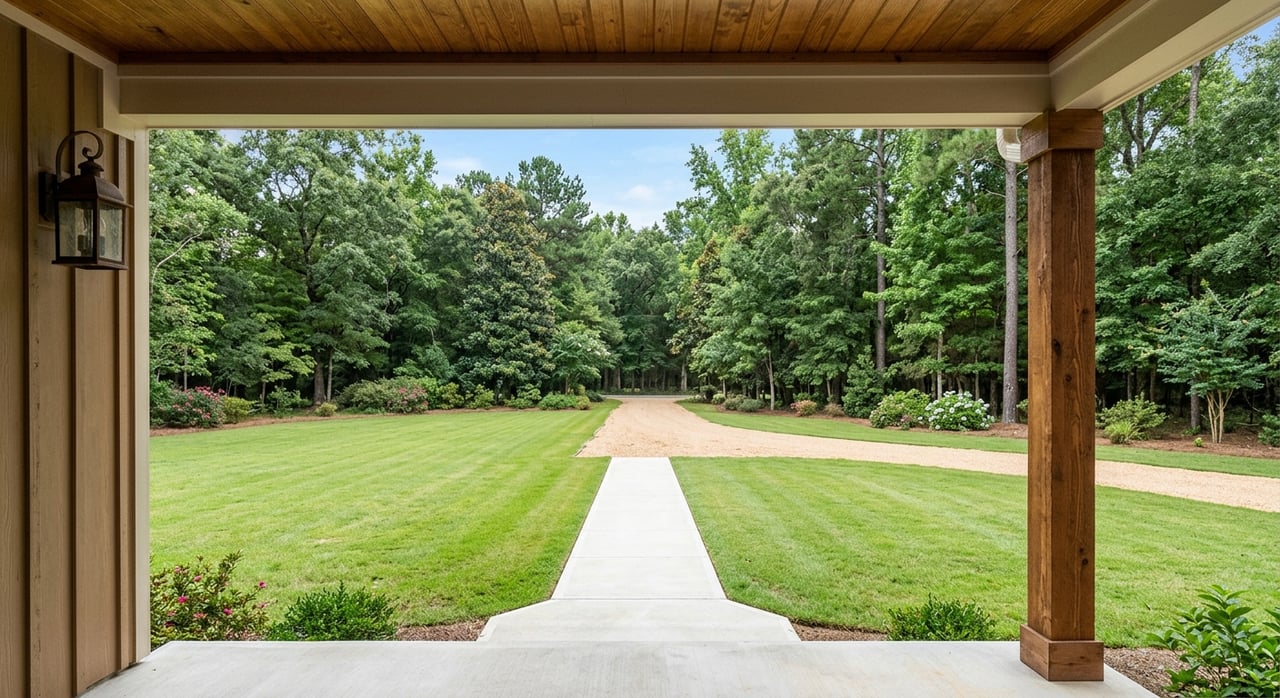
If you are selling land or acreage in Clayton, one mistake can cost you time and money: pricing the property before you know exactly what a buyer can do with it. Unlike a house, vacant land is valued by facts like zoning, access, utilities, survey details, and whether the tract can actually support a homesite or future split. The good news is that when you prepare those details up front, you can position your property more clearly and price it with more confidence. Let’s dive in.
Start With Jurisdiction and Zoning
The first step is figuring out which rules control your parcel. In the Clayton area, that may mean the Town of Clayton, the Clayton ETJ, or Johnston County. That matters because town parcels and county parcels can follow different zoning and subdivision rules.
The Town of Clayton says it has 17 conventional zoning districts, each with its own permitted uses, lot rules, and building standards. The town’s Planning Department maintains the official zoning map, and the UDO tables are used to confirm uses and setbacks. For county parcels, Johnston County zoning may apply instead, and the county notes that much of the county is zoned Agricultural-Residential.
This is why land should not be priced as fully buildable until the zoning district and permitted use are confirmed. If a buyer would need rezoning for the intended use, that affects timing and risk. Johnston County says rezoning generally takes about four months.
Gather the Facts Buyers Will Ask For
With land, buyers usually focus on what is documented and what is still unknown. A clean file can make your listing easier to understand and easier to trust. It also helps serious buyers make faster decisions.
Start by pulling together the basic property records. Johnston County GIS tax parcel data can help verify acreage, ownership, mailing address, deed references, and market value, but it is only a starting point. It is useful for reference, not a substitute for a survey or a true pricing analysis.
Confirm Access and Easements
Access is one of the first issues a buyer will review. Clayton notes that easements may be used for utilities, driveways, greenways, or drainage facilities, and the town also states that a survey is the only way to truly determine whether easements affect a property and where they are located.
That point is important for pricing. A tract with clean, documented access and clear easement information will usually be easier to market than one with unanswered questions. If your parcel fronts a state-maintained road, access may also involve a driveway permit path through NCDOT if the property is developed, redeveloped, the use changes, or access is altered.
Check Water, Sewer, or Septic Path
Utility availability can directly affect value. The Town of Clayton says electric, water, sewer, and irrigation services may be available depending on the parcel’s location within its jurisdiction, and utility availability is reviewed during private development review.
If public sewer is not available, Johnston County Environmental Health evaluates whether a lot is suitable for septic. The county’s process requires a site plan showing the road number, driveway, structure location, and setbacks. If the lot is suitable, the property must be surveyed and a plat submitted for final review.
Review Survey and Site Plan Needs
Many land questions lead back to one thing: documentation. Johnston County requires a preliminary site plan before permits are issued for residential building lots in major subdivisions, minor subdivisions, and all individual lots under three acres. The county says that plan must be a metes-and-bounds survey plat prepared by a licensed Professional Land Surveyor.
That plat must show details like road frontage, driveways, utilities, wells or septic locations, flood lines, wetlands, buffers, and easements. Even if you are not planning to develop the parcel yourself, having current survey information can reduce uncertainty for buyers.
Understand Subdivision Potential Before You Price
If your acreage may be split, that potential can influence value. But subdivision value is not automatic. It depends on the rules that apply to your specific parcel and whether the tract can actually meet them.
Johnston County says residential division requires at least 1.33 acres with public water or 2 acres without a public water source. For minor subdivisions, the county generally requires a preliminary plat, administrative review, and final plat recordation.
If you are marketing land based on possible division, be careful not to overstate what can be done. A realistic price should reflect what is currently supported by the parcel, along with the time, cost, and review needed to create additional lots. Any new plat must also meet county recording requirements before it can be recorded.
Price Land Based on Buildability, Not Guesswork
One of the most common mistakes sellers make is confusing tax value with market value. Johnston County says real property is appraised at 100% of market value as of the effective date of the latest general revaluation, and the current revaluation took effect on January 1, 2025. The county also notes that appraised value and assessed value are the same on the revaluation date.
That does not mean tax value should be your list price. The county’s process is built for taxation, not for positioning one specific tract in the current market against competing land listings and recent comparable sales.
What Buyers Usually Pay More For
Vacant land pricing often improves when the property has clear, documented buildability. In the Clayton and Johnston County market, that usually includes:
- Confirmed jurisdiction and zoning
- Known permitted use
- Legal access and road frontage
- Survey or plat documentation
- Utility availability or septic path
- Clear setback, easement, floodplain, wetland, or buffer information
- Realistic subdivision potential, if applicable
When these items are documented, buyers can better judge risk, timeline, and total project cost. That usually leads to stronger interest than a listing built on assumptions.
Why Comparable Sales Matter More
The strongest pricing support usually comes from recent sales of similar parcels with similar entitlement status. Johnston County’s revaluation process also reinforces the importance of sales data and recent sales in the property’s area.
In plain terms, a five-acre tract with public water access and a clear homesite path may not compete with a similar-sized tract that still needs septic evaluation, access clarification, or rezoning. Acreage size alone does not tell the whole story.
Account for Time and Holding Costs
If your property has upside through rezoning or subdivision, that future value may be real, but it is not immediate. Johnston County says rezoning generally takes about four months. That timeline can affect what a buyer is willing to pay today.
Holding costs matter too. The county notes that annual tax rates are set by the Board of County Commissioners, and taxes prorated at closing are part of the private contract between buyer and seller. When a buyer sees extra time, review steps, and carrying costs, they often price that into an offer.
Prepare for a Cleaner Land Sale
The smoothest land sales usually happen when key records are ready before the property hits the market. This helps reduce back-and-forth once a buyer starts asking technical questions. It also shows that the seller is organized and serious.
A strong pre-listing file may include:
- Current deed
- Tax parcel information
- Survey or recorded plat
- Recorded easements
- Restrictive covenants, if any
- Septic or well permits, if available
- Utility information, if available
- Driveway or access documentation, if applicable
For sellers, this kind of prep is not just administrative. It supports pricing, improves marketing clarity, and can make negotiations more straightforward.
Know How Disclosures May Apply
North Carolina’s Residential Property Disclosure Act applies to transfers of residential real property consisting of one to four dwelling units. That means a pure vacant lot or acreage parcel is usually outside the standard residential disclosure form unless a dwelling or another statutory trigger is involved.
When the statute does apply, the owner must furnish the residential property disclosure statement and the mineral and oil and gas rights disclosure no later than the time the purchaser makes an offer. Even when a standard disclosure form is not required, North Carolina brokers still have a duty to discover and disclose material facts in writing.
For you as a seller, the takeaway is simple: accuracy matters. If there is a fact that could affect a reasonable buyer’s decision, it should be handled clearly and carefully.
Why Preparation Helps You Protect Value
Land buyers in Clayton and Johnston County tend to look past surface impressions and focus on what the property can actually support. They want answers about jurisdiction, utility path, access, survey details, and whether the tract is a realistic homesite or future project. The more clearly you can answer those questions, the easier it is to justify your price.
This is where experienced guidance matters. Selling land is often less about broad marketing language and more about assembling the right facts, anticipating buyer concerns, and presenting the parcel in a way that matches how the market evaluates it.
If you are thinking about selling land or acreage in Clayton, a smart first move is to sort out the property details before choosing a price. For a tailored strategy on pricing, presentation, and positioning, connect with Rod Hudson.
FAQs
What should you verify before pricing land in Clayton?
- You should confirm whether the parcel is in Clayton town limits, the Clayton ETJ, or Johnston County, then verify zoning, permitted use, setbacks, access, and utility or septic path before pricing it as buildable.
How is vacant land usually priced in Johnston County?
- Vacant land is usually priced based on recent comparable sales and the parcel’s documented buildability, including zoning, access, utilities, septic suitability, easements, and any realistic subdivision potential.
Does tax value equal market value for land in Clayton?
- No. Johnston County tax value is part of the county’s revaluation process, but it is not the same as an asking price for a specific parcel in the open market.
What documents help sell acreage faster in Clayton?
- Helpful documents often include the deed, tax parcel data, a current survey or plat, recorded easements, restrictive covenants, septic or well permits, and any utility or driveway documentation.
Can you market acreage in Clayton based on subdivision potential?
- You can discuss subdivision potential only after reviewing the applicable county or town rules, lot size requirements, and plat process so the marketing reflects a realistic path rather than an assumption.
Do vacant land sellers in North Carolina need a residential disclosure form?
- A pure vacant lot or acreage parcel is usually outside the standard residential disclosure form unless a dwelling or another statutory trigger is involved, but material facts still need to be disclosed properly.